
Tracking home cleaning tasks efficiently means using a structured schedule, a logical cleaning order, and the right progress tools to keep your home consistently clean without burning out. For Singapore homeowners, where humidity accelerates mold and dust buildup, an unplanned approach to cleaning creates real hygiene problems fast. The good news is that systems like the Clean Mama method and tools like Tembrica break the work into daily, weekly, monthly, and seasonal categories so nothing gets missed. This guide covers every step: how to build your schedule, which tools track your progress, and how to keep the system running long term.
What are the essential components of an effective home cleaning schedule?
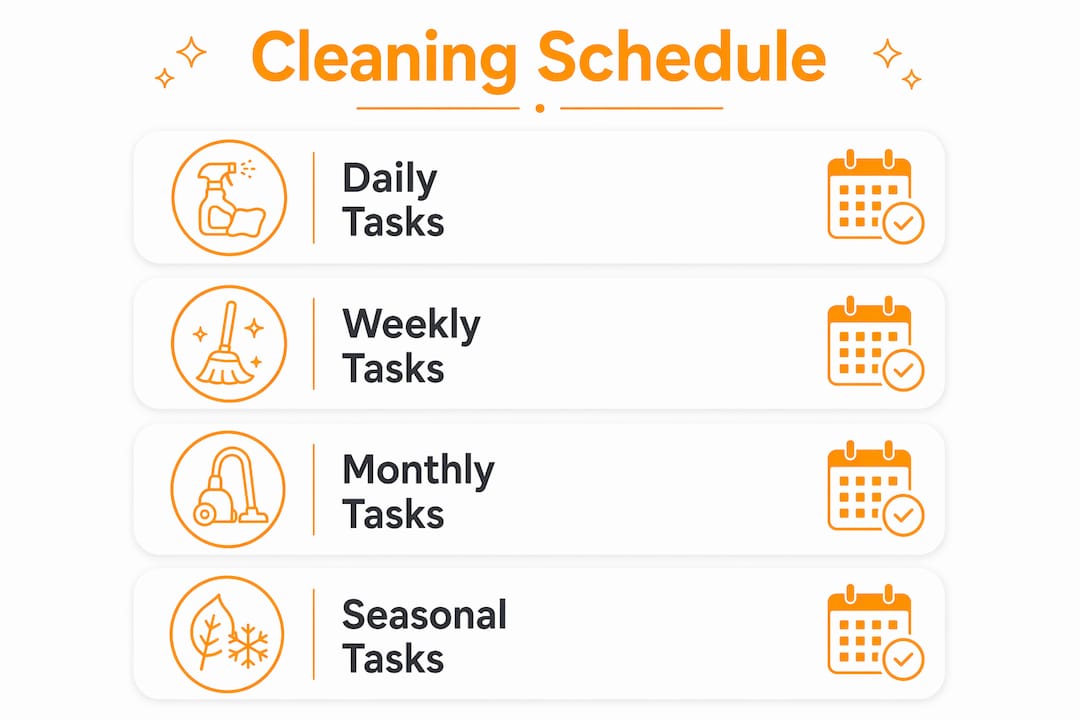
A cleaning schedule is defined as a frequency-based plan that assigns specific tasks to daily, weekly, monthly, and seasonal time slots. Without this structure, homeowners default to reactive cleaning, which takes longer and leaves gaps.
Daily tasks
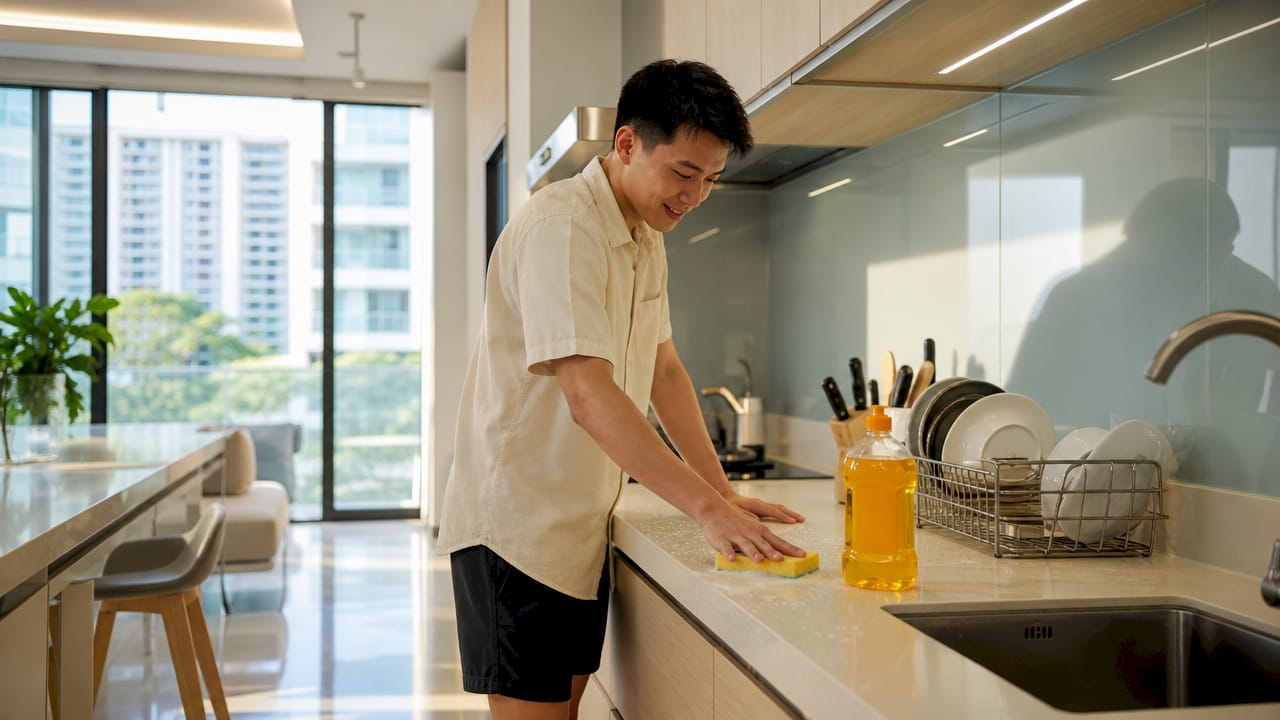
Daily tasks focus on high-traffic areas that deteriorate fast. These include wiping kitchen counters, washing dishes, sweeping floors, and tidying common spaces. The goal is a quick reset that prevents buildup from compounding into a bigger job later in the week.
Weekly tasks
Weekly tasks target areas that need regular attention but not daily effort. Vacuuming carpets, mopping floors, scrubbing bathrooms, and cleaning mirrors fall here. Martha Stewart’s method assigns specific rooms or task types to specific days of the week, which removes the guesswork about what to clean next.
Monthly and seasonal tasks
Monthly tasks cover less visible areas: inside appliances, ceiling fans, window tracks, and grout lines. The Clean Mama approach schedules only one monthly focus area per month so no single month feels overloaded. Seasonal tasks, done in march, june, september, and december, handle items like curtain washing, mattress flipping, and air-conditioner filter cleaning. These are especially relevant in Singapore, where air quality and humidity make filter maintenance a health priority.
Pro Tip: Write your monthly focus area on a physical calendar at the start of each month. Seeing it in writing increases the chance you actually do it.
Layering tasks by frequency is the key insight here. Doing everything at once creates fatigue. Spreading tasks across time slots keeps the workload manageable every single day.
-
Daily: dishes, counters, floor sweep, quick tidy
-
Weekly: vacuum, mop, bathroom scrub, mirrors
-
Monthly: appliances, fans, grout, window tracks
-
Seasonal: curtains, mattresses, air-con filters, outdoor areas
How can a systematic cleaning approach improve tracking and efficiency?
A systematic cleaning approach is defined as following a fixed sequence of steps that prevents rework and makes logged task completions accurate. The American Cleaning Institute recommends a four-stage process that applies to every room.
-
Declutter first. Remove items that do not belong in the room before touching any cleaning product. This prevents moving dirt around and gives you a clear surface to work on.
-
Dry tasks second. Dust shelves, wipe dry surfaces, and sweep loose debris. Always work top to bottom so dust falls to the floor rather than landing on surfaces you already cleaned.
-
Wet tasks third. Apply cleaners to sinks, toilets, stovetops, and counters. Let products sit for the recommended contact time before wiping. This is where kitchens and bathrooms get priority because these areas carry the highest hygiene risk.
-
Floors last. Vacuum or mop after all other tasks are complete. This captures everything that fell during the earlier stages and avoids re-soiling clean floors.
This sequence matters for tracking because pairing tasks to a cleaning stage prevents duplicate entries on your checklist. If you log “bathroom cleaned” before you have mopped the floor, your record is inaccurate. Following the four stages means each logged completion reflects real, finished work.
Pro Tip: Prepare a cleaning caddy with all your supplies before you start. Carrying everything room to room cuts the time spent walking back and forth by a significant margin.
Systematic top-to-bottom cleaning also reduces the mental load. You do not have to decide what to do next. The sequence tells you. That reduction in daily decision-making is exactly what Clean Mama identifies as the core behavioral benefit of a cleaning system.
What tools and methods can homeowners use to track cleaning progress?
The best tools for tracking cleaning progress fall into two categories: digital apps and physical checklists. Each has real strengths depending on your household setup.
Digital apps
Tembrica generates a frequency-based cleaning plan with task assignments, time estimates, and family member responsibility. It tracks completion with check-offs, streaks, and percentage indicators that show how much of your weekly plan is done. Streaks are particularly effective for building habits because they create a visible record of consistency. CleanSoon offers similar features with reminders and rescheduling options for missed tasks. Both apps warn that realistic initial frequency settings are critical. If you set tasks too frequently, you burn out and abandon the system within weeks.
Physical checklists and planners
Canva offers free printable cleaning checklist templates that homeowners can customize by room, task, and frequency. Physical checklists work well for households where not everyone uses a smartphone or where a visible reminder on the fridge drives better participation. The limitation is that physical lists do not send reminders and cannot reschedule missed tasks automatically.
Digital vs. physical: which works better for Singapore households?
| Feature | Digital apps | Physical checklists |
|---|---|---|
| Reminders and alerts | Yes, automatic | No |
| Progress tracking | Streaks, percentages | Manual tick marks |
| Family task assignment | Built-in by user | Written by hand |
| Rescheduling missed tasks | Automatic | Manual rewrite |
| Cost | Free to paid tiers | Free to print |
| Best for | Tech-comfortable households | Households with mixed tech use |
The strongest approach for most Singapore homeowners combines both. Use a digital app for reminders and progress tracking, and post a printed weekly checklist in the kitchen as a shared reference for the whole family.
-
Assign tasks by room to specific family members for clear accountability
-
Set realistic frequencies: daily tasks should take no more than 15 minutes total
-
Use the rescheduling feature in apps like Tembrica when life interrupts the plan
-
Review your tracking data weekly to spot which tasks are consistently missed
How to implement a cleaning tracking system in a Singapore household
Setting up a cleaning tracking system takes about 30 minutes the first time. The payoff is a household that runs on autopilot for months.
-
List every cleaning task in your home. Go room by room and write down every task, from wiping the stovetop to cleaning the toilet bowl. Do not filter yet. Just capture everything.
-
Assign a frequency to each task. Use daily, weekly, monthly, or seasonal. Be honest about what actually needs doing at each interval. In Singapore, bathrooms need weekly scrubbing at minimum due to humidity. Air-con filters need cleaning every one to three months depending on usage.
-
Sequence tasks using the four-stage cleaning order. Declutter, dry, wet, floors. Apply this sequence within each cleaning session so your tracking reflects accurate completions.
-
Choose your tracking method. Pick a digital app like Tembrica or a printed Canva template. Set it up with all your tasks and frequencies before your first cleaning session.
-
Assign responsibility by room or task type. Room-based ownership in digital planners prevents conflict and makes rescheduling easier when someone is unavailable. For example, one family member owns the kitchen, another owns the bathrooms.
-
Run the system for two weeks, then review. Check which tasks were completed consistently and which were skipped. Adjust frequencies down if the workload feels unsustainable. The goal is a rhythm you can maintain every week, not a perfect plan you abandon after a month.
-
Build in a monthly review. At the start of each month, confirm your monthly focus area and check that seasonal tasks are scheduled. This keeps the system current as your household’s needs change.
A predictable weekly rhythm is the single biggest factor in long-term success. When cleaning happens at the same time each week, it becomes a habit rather than a chore you have to motivate yourself to start.
What common pitfalls should you avoid when tracking cleaning tasks?
The most common reason cleaning tracking systems fail is overloading the daily task list. When daily tasks take more than 20 minutes, homeowners skip them. Skipped tasks break the streak, which reduces motivation, and the system collapses within a month.
-
Do not track every possible task. Focus on high-impact, noticeable areas like kitchen touchpoints, bathrooms, and floors. Tracking low-visibility tasks like the inside of a rarely used cabinet adds clutter to your system without meaningful benefit.
-
Do not treat a missed day as a failure. Apps like Tembrica and CleanSoon include rescheduling features precisely because real life interrupts plans. Reschedule the task and move on.
-
Do not assign too many tasks to one person. Shared households need shared responsibility. Uneven distribution creates resentment and reduces participation over time.
-
Do not ignore the data your app generates. If the same task is skipped every week, the frequency is wrong. Adjust it rather than leaving an inaccurate record in your system.
-
Do not start with a perfect system. Start with a minimal core of tasks and add more as the habit solidifies. A simple system you follow beats a detailed system you abandon.
Expert advice from the American Cleaning Institute reinforces this: targeting time-sensitive and noticeable areas keeps your tracking reliable and your cleaning effort focused where it actually matters.
Key takeaways
The most effective way to track home cleaning tasks is to combine a frequency-based schedule, a systematic four-stage cleaning order, and a digital or physical tracking tool that assigns clear responsibility to each household member.
| Point | Details |
|---|---|
| Use frequency-based scheduling | Break tasks into daily, weekly, monthly, and seasonal categories to prevent overwhelm. |
| Follow the four-stage cleaning order | Declutter, dry, wet, then floors to avoid rework and log accurate completions. |
| Choose the right tracking tool | Digital apps like Tembrica suit tech-comfortable households; printed Canva templates work for mixed-use homes. |
| Assign room-based ownership | Giving each person a specific area reduces conflict and improves accountability. |
| Start minimal, then expand | A simple system you follow consistently outperforms a detailed one you abandon after two weeks. |
What I have learned from tracking cleaning tasks over time
The biggest mistake I see Singapore homeowners make is building a cleaning system that looks great on paper but is impossible to sustain. They list 30 daily tasks, download three apps, and print a color-coded calendar. By week two, the system is abandoned and the guilt kicks in.
What actually works is boring by comparison. Pick five daily tasks that take 15 minutes total. Pick one day for weekly cleaning and stick to it. Use one tool, whether that is Tembrica or a printed checklist on the fridge, and do not switch until the habit is solid.
Singapore’s climate adds a layer of urgency that homeowners in cooler countries do not face. Humidity means mold grows fast in bathrooms and on window seals. Dust accumulates quickly near air-con vents. These are not optional cleaning areas. They belong in your weekly rotation, not your monthly one.
The other thing I have noticed is that family participation changes everything. When one person owns the entire cleaning system, it becomes a source of stress and resentment. When tasks are assigned by room and everyone can see the shared progress in an app, the dynamic shifts. Cleaning becomes a household norm rather than one person’s burden.
Realistic expectations matter more than the perfect system. A home that is consistently 80% clean is healthier and less stressful than one that swings between spotless and chaotic.
— john
How Clean On Demand supports your home cleaning routine

Cleanondemand is Singapore’s top-rated part-time cleaning service, covering general cleaning, deep cleaning, end-of-tenancy cleaning, and curtain cleaning. A personal tracking system handles daily and weekly maintenance well, but some tasks genuinely need professional equipment and trained hands. Deep cleaning behind appliances, post-renovation cleanup, and thorough end-of-tenancy work are faster and more thorough when handled by professionals. Booking through Cleanondemand takes minutes via the mobile app, and the service fits around your existing cleaning schedule rather than replacing it. When your tracking system flags a task that is beyond your tools or time, Cleanondemand is the practical next step.
FAQ
What is the best way to track home cleaning tasks?
The best method combines a frequency-based schedule with a digital app like Tembrica or a printed checklist. Assign tasks by room and set realistic frequencies to maintain consistency.
How often should Singapore homeowners clean bathrooms?
Bathrooms in Singapore need weekly scrubbing at minimum. High humidity accelerates mold and bacteria growth, making weekly cleaning a hygiene necessity rather than a preference.
What is the correct order for cleaning a room?
The American Cleaning Institute recommends decluttering first, then dry tasks, then wet tasks, and floors last. This sequence prevents rework and keeps your task log accurate.
How do I stop my cleaning routine from falling apart?
Keep your daily task list short enough to finish in 15 minutes. Use the rescheduling feature in apps like Tembrica when you miss a day, and adjust task frequencies if the same tasks are skipped repeatedly.
Are digital cleaning apps better than printed checklists?
Digital apps offer reminders, progress tracking, and automatic rescheduling that printed checklists cannot match. For households with mixed tech comfort, combining both methods works best.