
A disinfection cleaning service uses specific chemical agents to kill viruses, bacteria, and fungi on surfaces, providing a higher level of hygiene than standard cleaning or sanitising. Unlike a general tidy or a mop over the floor, professional disinfection targets pathogens at the microscopic level, using EPA-registered disinfectants that must achieve a 99.999% pathogen kill rate within a defined contact time. The CDC classifies this as a distinct process from both cleaning and sanitising, and public health guidance reserves it for specific high-risk scenarios. Understanding what this service actually involves helps you make better decisions for your home or business.
What is the difference between cleaning, sanitising, and disinfection?
These three terms describe three different levels of hygiene, and confusing them leads to either under-protection or unnecessary chemical use.
Cleaning removes visible dirt, dust, and grease from surfaces using soap, water, and physical scrubbing. It reduces the number of germs present but does not kill them. A clean surface looks and smells fresh, but pathogens can still survive on it.
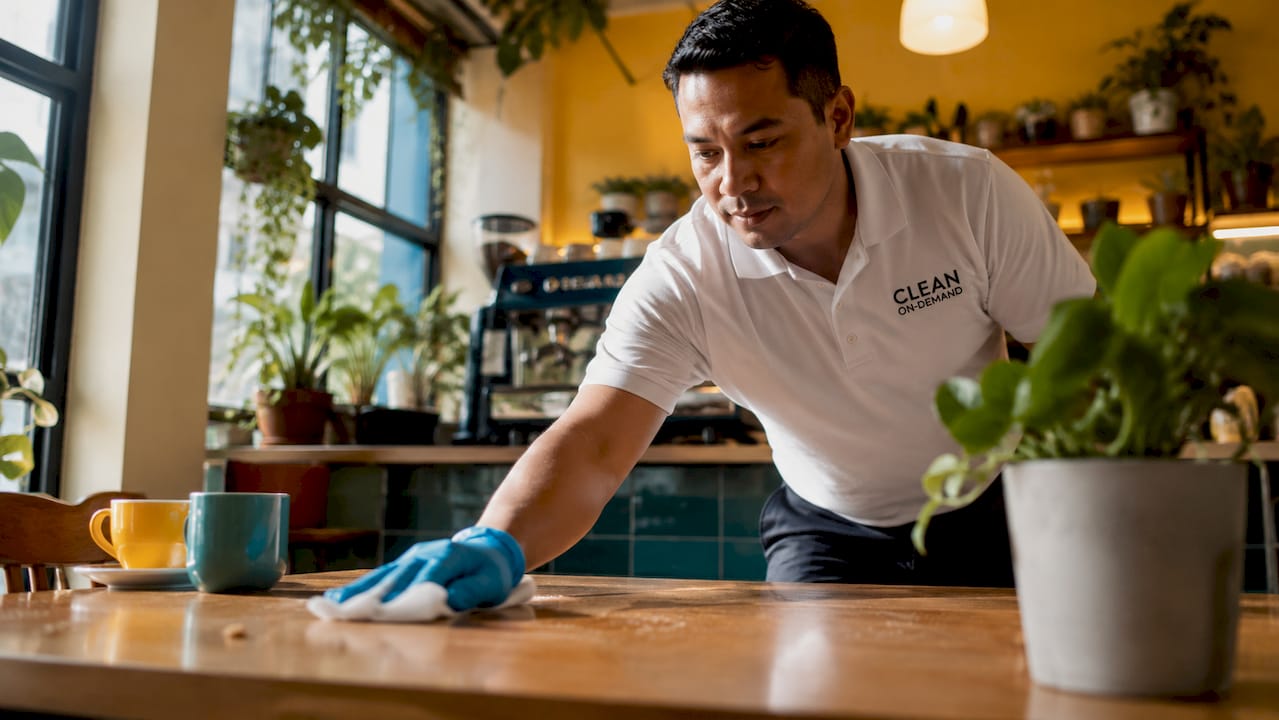
Sanitising reduces the number of germs on a surface to a level considered safe by public health standards. Sanitisers are milder than disinfectants and are commonly used in food preparation areas. They lower microbial counts but do not eliminate all pathogens.
Disinfection goes further. Disinfectants kill pathogens including viruses, bacteria, and fungi by using stronger chemical formulations. The EPA registers disinfectants as antimicrobial pesticides, requiring rigorous testing before approval. This is a critical distinction: a product labelled as a cleaner or sanitiser does not meet the same efficacy bar as a registered disinfectant.
| Process | What it does | Typical use case |
|---|---|---|
| Cleaning | Removes visible dirt and reduces germs | Daily household tidying |
| Sanitising | Reduces germs to safe levels | Kitchen surfaces, food prep areas |
| Disinfecting | Kills nearly all pathogens on surfaces | Post-illness, high-traffic areas, healthcare settings |
The practical takeaway is straightforward. Cleaning is the baseline. Sanitising is appropriate for food contact surfaces. Disinfection is the correct response when someone is ill, when surfaces carry a genuine infection risk, or when a space serves vulnerable people.
How do professional disinfection cleaning services work?
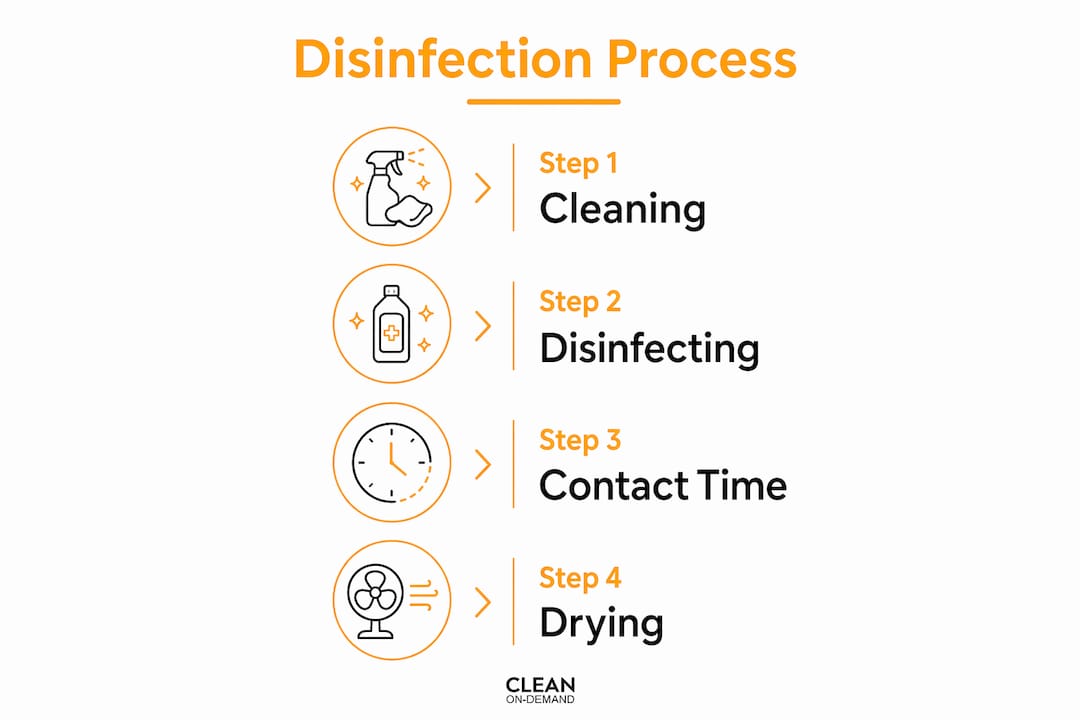
Professional disinfection cleaning follows a two-step process. Cleaning must always come first. Dirt and organic matter block disinfectants from reaching pathogens on the surface, making chemical application ineffective if applied to an uncleaned area. Professionals remove visible soiling before applying any disinfectant product.
Once surfaces are clean, the disinfectant is applied and left for the required contact time. Contact time is the period the surface must remain visibly wet with the product for it to work. Cutting this short is one of the most common reasons disinfection fails. Improper use of disinfectants frequently causes failed disinfection, even when the product itself is effective.
What areas do professionals target?
Professional teams focus on high-touch surfaces and shared spaces. These include door handles, light switches, lift buttons, taps, toilet flush handles, keyboards, and shared equipment. In commercial settings, reception desks, communal kitchens, and meeting room surfaces receive priority attention.
Providers typically offer two types of treatment:
- Routine scheduled disinfection. Businesses often schedule daily disinfection of high-touch areas and deeper weekly treatments. This approach reduces staff illness and gives occupants confidence in the space.
- Emergency same-day disinfection. When an outbreak occurs, emergency disinfection services respond quickly to reduce downtime and contain transmission risk.
- Customised treatment plans. Providers assess the specific risk profile of a space, including foot traffic, occupant vulnerability, and surface types, then build a schedule accordingly.
- Fogging and electrostatic spraying. Some providers use fogging equipment or electrostatic sprayers to coat surfaces evenly, including areas that are difficult to reach by hand.
- Post-service verification. Reputable services document the products used, application method, and areas treated, giving clients a clear record for compliance or peace of mind.
Pro Tip: Always ask your provider for the EPA registration number of the disinfectant they use. This confirms the product has been independently tested and approved for the pathogens you are concerned about.
What are the benefits and appropriate use cases of disinfection cleaning services?
The primary benefit of professional disinfection is a measurable reduction in pathogen load on surfaces. This directly lowers the risk of illness transmission in shared spaces. The CDC recommends professional disinfection mainly for high-risk scenarios, which means the service delivers its greatest value when the risk is real and specific.
Key benefits
- Reduced illness transmission. Disinfection removes pathogens from surfaces that people touch repeatedly throughout the day, cutting the chain of infection.
- Protection for vulnerable people. Homes or facilities with immunocompromised residents, elderly occupants, or young children benefit significantly from targeted disinfection.
- Occupant confidence. Businesses report that visible disinfection activity increases staff and visitor confidence in the safety of the space.
- Outbreak response. When a confirmed illness occurs in a household or workplace, professional disinfection reduces the risk of further spread.
- Compliance support. Healthcare facilities, food businesses, and childcare settings often have regulatory requirements that professional disinfection helps meet.
When is disinfection cleaning the right choice?
The service is most appropriate in these situations:
- Someone in the household or workplace has been ill with a contagious condition.
- The space serves immunocompromised individuals or people at elevated health risk.
- High foot traffic creates a persistent surface contamination risk.
- A business needs to demonstrate hygiene standards to regulators or clients.
- A property is being prepared for new occupants after an extended vacancy.
Pro Tip: For a healthy household with no illness present, regular cleaning with soap and water is usually sufficient. Reserve professional disinfection for situations where a specific risk exists. Targeted use is more effective and avoids unnecessary chemical exposure.
Pairing professional disinfection with air quality maintenance gives a more complete picture of indoor hygiene. Surface pathogens and airborne particles are separate concerns, and addressing both produces the safest environment.
What are the risks and limitations of frequent disinfection?
Disinfection is a targeted tool, not a daily routine for every surface in every setting. Overuse carries genuine risks that are worth understanding before scheduling regular treatments.
Excessive use of quaternary ammonium compounds (a common class of disinfectant) can lead to chemical persistence in household dust and potential long-term health concerns. These compounds accumulate over time and have been linked to skin sensitisation. The same research flags a risk of contributing to antimicrobial resistance when disinfectants are used where no genuine infection risk exists.
The main risks of overuse include:
- Skin and respiratory sensitisation. Frequent exposure to strong disinfectants can cause reactions in occupants, particularly children and people with asthma.
- Antimicrobial resistance. Unnecessary disinfectant use may promote resistance in microbial populations, reducing the effectiveness of these products over time.
- Environmental accumulation. Quaternary ammonium compounds do not break down quickly and can build up in indoor environments and waterways.
- Limited benefit in low-risk settings. Applying disinfectants to surfaces in a healthy household with no illness present provides little measurable benefit while adding chemical load.
Experts caution consumers against overuse of chemical disinfectants in healthy households to prevent unnecessary health and environmental impact. Disinfection should be a targeted response to a specific risk, not a substitute for regular cleaning.
The correct approach is to use disinfection when a real risk is present and to rely on soap, water, and regular cleaning at all other times. Professional providers who follow public health guidance will help you identify when disinfection is genuinely warranted.
How to choose and maintain effective disinfection cleaning services?
Choosing the right provider requires more than comparing prices. The EPA does not certify or regulate cleaning companies, and no federal licence exists for businesses offering disinfection services. State requirements vary widely. This means the responsibility for verifying quality falls on you.
When evaluating a provider, check for the following:
- EPA-registered products. Ask for the product name and EPA registration number. Registered disinfectants have been tested and approved for specific pathogens.
- Trained staff. Ask whether technicians have received formal training in disinfectant application, contact times, and safety procedures.
- Clear treatment documentation. A reputable provider gives you a written record of what was applied, where, and when.
- Appropriate scheduling. A good provider will not push daily disinfection where it is not needed. They will recommend a frequency based on your actual risk level.
- Transparent product safety data. Providers should be able to share safety data sheets for the products they use, particularly if children or pets are present.
For ongoing hygiene between professional visits, keep surfaces clear so disinfectants can make full contact, ventilate rooms after treatment, and follow any re-entry guidance the provider gives. Air duct sanitising is a separate but complementary consideration for properties where airborne hygiene is also a priority.
Key takeaways
Professional disinfection cleaning is a targeted, two-step process using EPA-registered chemicals to kill pathogens on surfaces, and it delivers genuine value only when applied to real infection risks.
| Point | Details |
|---|---|
| Disinfection vs cleaning | Disinfection kills pathogens; cleaning only removes dirt and reduces germ numbers. |
| Two-step process | Surfaces must be cleaned before disinfectants are applied, or the chemical cannot reach pathogens. |
| When to use it | Reserve professional disinfection for illness, high-risk occupants, or high-traffic commercial spaces. |
| Verify your provider | The EPA does not certify cleaning companies; always confirm EPA-registered products and trained staff. |
| Avoid overuse | Excessive disinfectant use risks skin sensitisation, antimicrobial resistance, and environmental accumulation. |
Why I think most people misunderstand disinfection cleaning
People tend to treat "clean" and "disinfected" as the same thing. They are not. I have seen households that scrub surfaces daily but never achieve actual disinfection because they use products that are not registered disinfectants. The surface looks clean, and it is, but the pathogens are still there.
The other mistake I see regularly is the opposite: businesses that disinfect every surface every day regardless of risk. This is not safer. It is wasteful, potentially harmful, and it creates a false sense of security by substituting chemical activity for genuine risk assessment.
The most useful shift in thinking is this: disinfection is a response to a specific threat, not a permanent state to maintain. A healthy home with no illness present does not need daily disinfection. A care home with vulnerable residents does. The difference is the risk profile, not the desire for cleanliness.
When you do need professional disinfection, the product registration number matters more than the brand name on the van. Ask for it. A provider who cannot give you the EPA registration number of the disinfectant they use is not providing a verified service. That one question separates informed buyers from everyone else.
— Joyce
Professional disinfection cleaning with Clean On Demand
Clean On Demand provides professional disinfection cleaning for homes and businesses, using EPA-registered disinfectants applied by trained staff who follow correct contact times and surface preparation procedures. Whether you need a one-off treatment after an illness or a scheduled programme for a commercial property, Clean On Demand offers flexible booking through its mobile app or online. Services cover high-touch surfaces, shared spaces, and full-property treatments, with clear documentation provided after each visit. Book your professional cleaning service directly through the app and get a spotless, properly disinfected space without the guesswork.
FAQ
What is a disinfection cleaning service?
A disinfection cleaning service uses EPA-registered chemical agents to kill viruses, bacteria, and fungi on surfaces, going beyond standard cleaning to eliminate pathogens at the microscopic level.
What is the difference between cleaning and disinfection?
Cleaning removes visible dirt and reduces germ numbers, while disinfection uses stronger chemicals to kill nearly all pathogens on a surface, meeting a 99.999% kill-rate standard.
How does a professional disinfection cleaning service work?
Professionals first clean surfaces to remove dirt, then apply a registered disinfectant and allow the required contact time for the chemical to kill pathogens effectively.
When should I book a disinfection cleaning service?
Book a professional disinfection service when someone in the space has been ill, when occupants are immunocompromised, or when a high-traffic commercial area requires verified pathogen reduction.
Does the EPA certify disinfection cleaning companies?
The EPA does not certify or licence cleaning companies. Consumers should verify that providers use EPA-registered products and employ staff trained in correct disinfectant application.